
Rafael Jung · 24 September 2026
Examining Participant Feedback Loops in Enhancing Future Iterations of Regional Festivals
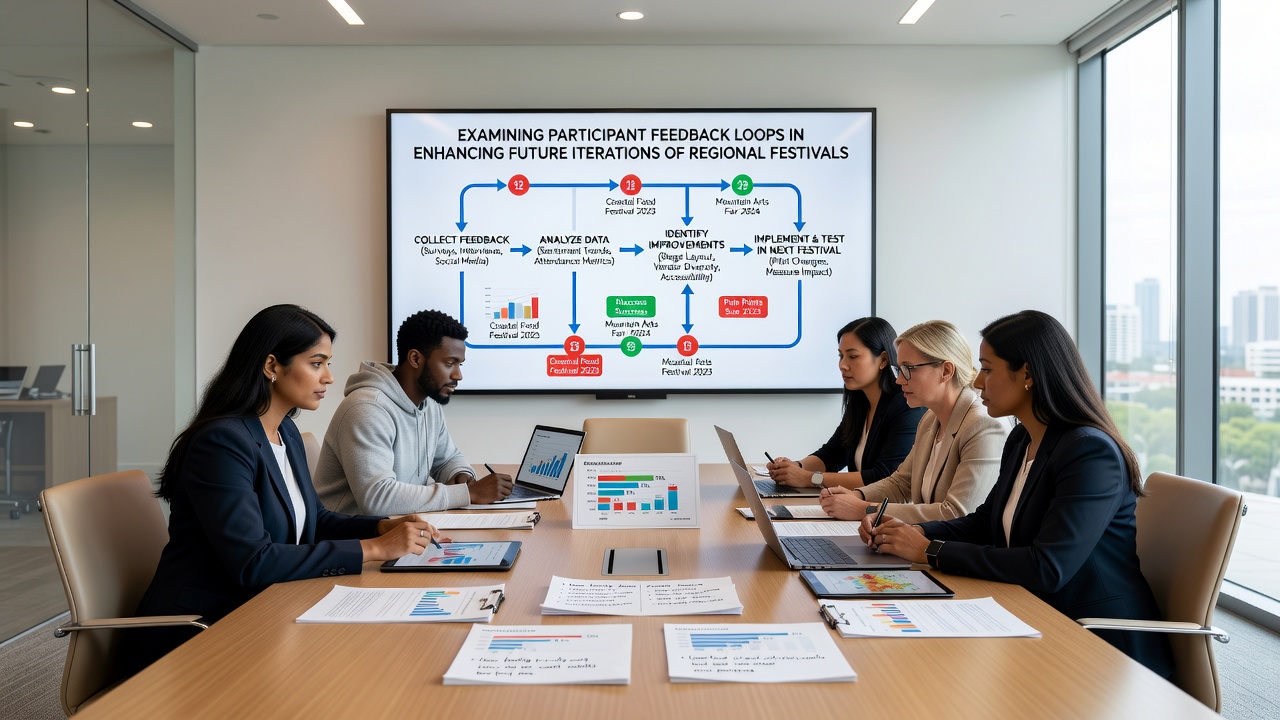
Regional festivals rely on structured feedback systems to refine programming, logistics, and attendee experiences across successive years, and researchers have documented how these loops operate through repeated cycles of data gathering, analysis, and implementation. Organizers collect responses via digital surveys, mobile applications, and on-site kiosks immediately after events conclude, which allows teams to capture both quantitative ratings and qualitative comments in the same dataset. Studies from institutions like the University of Melbourne indicate that festivals incorporating multi-channel feedback see measurable shifts in attendance patterns and satisfaction metrics when adjustments address recurring themes such as queue management or food vendor variety.
Data Collection Methods Across Multiple Touchpoints
Feedback mechanisms start with pre-event registration forms that gather baseline expectations, then continue through real-time polling during performances and wrap up with comprehensive post-event questionnaires sent within 48 hours. Event management platforms integrate these inputs into centralized databases where analysts segment responses by demographics, ticket type, and geographic origin to identify patterns that single-source methods often miss. Government reports from the National Endowment for the Arts show that festivals using integrated digital tools achieve response rates above 35 percent compared with paper-only approaches that hover near 15 percent. Observers note that social media monitoring supplements formal channels because attendees frequently share unprompted observations on public platforms that reveal issues not captured in structured surveys.
Analysis Techniques and Pattern Identification
Once collected, raw feedback undergoes statistical processing and thematic coding to isolate actionable items, and teams apply sentiment analysis tools to categorize thousands of open-ended comments into clusters around safety, programming, accessibility, and sustainability. Data indicates that festivals scheduling dedicated review periods within two weeks of closing achieve faster turnaround on changes for the following season. Those who've studied this process find that cross-referencing feedback with ticket sales figures and vendor revenue data strengthens the validity of conclusions drawn from participant comments alone. In September 2026 several regional events plan to debut revised site layouts based on aggregated 2025 input regarding pedestrian flow and emergency access routes.
Implementation Strategies for Subsequent Editions
Organizers translate identified priorities into concrete modifications such as expanded shuttle services, adjusted performance schedules, or new waste-reduction protocols, and they communicate these updates to past participants through targeted email campaigns and social announcements. Research published by Canadian Heritage demonstrates that festivals publishing “you said, we did” summaries retain higher percentages of returning attendees because transparency builds trust in the feedback process. Iterative adjustments accumulate over multiple years, creating compounding improvements that compound when each cycle incorporates lessons from the previous one. Event coordinators often pilot small-scale changes at mid-year community gatherings before applying them to the main festival footprint.
Challenges in Maintaining Effective Loops
Response bias remains a persistent issue because participants with strong positive or negative experiences tend to reply more readily than those with neutral views, and analysts counter this by weighting samples or offering incentives for broader participation. Resource constraints limit how deeply some smaller regional festivals can process large volumes of qualitative data, which leads many to partner with local universities for coding assistance. Privacy regulations require careful handling of personal identifiers within feedback databases, and compliance frameworks from the European Union set standards that festivals in other regions increasingly adopt voluntarily. Those monitoring long-term trends observe that festivals maintaining consistent feedback protocols over five or more iterations report steadier growth in both attendance and repeat visitation rates.
Conclusion
Feedback loops function as continuous improvement engines for regional festivals when collection, analysis, and implementation phases connect seamlessly across annual cycles. Data from multiple national agencies and academic sources confirms that structured participant input correlates with operational refinements and sustained audience engagement. As planners prepare for events scheduled in September 2026, documented practices show that closing the loop through visible action on prior suggestions strengthens future participation and operational efficiency.